News
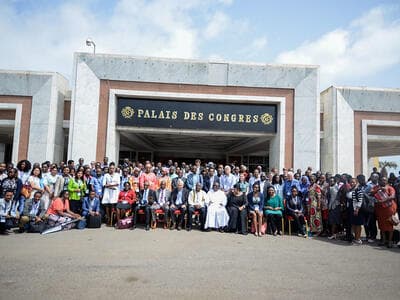
African Scientists to be Profiled at Landmark Scientific Meeting
Friday, August 2, 2019
Three-day meeting to profile scientific research by Masters, PhD and Post-doctoral researchers
across 21 African countries including South Africa
JOHANNESBURG, South Africa – July 15, 2019 – Scientists from South Africa will be among
300 health scientists from Africa and other parts of the world that will gather at a landmark
scientific gathering between July 15 and 17 in Dakar, Senegal to showcase ground-breaking
research aimed at reducing Africa’s disease burden and creating healthier communities.
Scientific breakthroughs to be discussed at the meeting include progress being made on
research towards an HIV cure and early detection tools for cancer and malaria.
The DELTAS Africa Scientific Conference, themed, ‘ A critical mass: developing world class research leaders’ will be the first in Francophone Africa, demonstrating The African Academy
of Science’s commitment to break language and geographical barriers and help foster intraAfrican collaboration.
It is being organised through a partnership between the Senegal based DELTAS Africa network and related Francophone-based programmes including The Malaria Research Capacity Development (MARCAD).
“The conference represents a unique opportunity to demonstrate the value of investing i n science
and in training a critical mass of scientific leaders in Africa,” says The AAS Deputy Director of
DELTAS Africa Programme Manager Alphonsus Neba. “DELTAS Africa is creating professional
cutting-edge research environments that will be sustained long after the programme has ended
and provide conducive environments to do great science,” he adds
Among scientists from South Africa who will be profiled at the meeting are Nicole De Wet, a
Postdoctoral Fellow studying the causes of risk-taking behaviour among adolescents in South
Africa and Prof Jonathan Levin who is investigating mental health among HIV-infected children
and adolescents in Uganda.
The convening will be the third Annual Grantees’ Meeting of The Developing Excellence in
Leadership, Training and Science (DELTAS Africa) programme; a US$100 million programme
of The African Academy of Sciences supporting the Africa-led development of world-class
scientific leaders through health research support, training fellowships, mentorship, and
investments in research infrastructure in 12 programmes spanning 21 countries. Notable
attendees will include the Father of Africa Genomics, Charles Rotimi from the National Institute
of Health and the 2008 Nobel Laureate in Chemistry, Marty Chalfie.
DELTAS Africa’s goal is to produce a critical mass of new cadre health researchers and
scientists who will be at the forefront of cutting-edge research, influencing local health policy
and driving a locally relevant health research agenda for Africa. The DELTAS Africa Scientific
Conference will mark a major milestone in the run-up to this critical objective.
Among the programme’s achievements to date:
The 12 programmes have collectively attracted additional 298 grants worth over $227 million and received 153 prizes and awards worth $9.3million in recognition of their scientific excellence.
The meeting will also provide a platform for over 200 DELTAS Africa funded fellows and
researchers – specifically Masters, PhD and Post-doctoral trainees from its 11 programmes
spanning Kenya, Mali, Senegal, Côte d’Ivoire, Ghana, South Africa, Uganda, and Zimbabwe –
to showcase scientific outcomes and likely impact of their health research.
Scientific breakthroughs to be discussed at the meeting include progress being made on
research towards an HIV cure in South Africa, and efforts towards the development of a lowcost HIV drug
resistance assay (70% lower cost - from $100-$200 to $40-$70), that could substantially reduce the
cost of HIV drug resistance surveillance in Africa.
PhD scientist Mohanad Mohamed in South Africa has used next generation gene expression
data to develop cancer disease classification models combining both machine learning and
statistical approaches for high dimensional data. The models being developed by Mohanad
Mohammed can potentially be used by researchers and oncologists to aid in formulating
strategies for early diagnosis and treatment of cancer particularly in Sub-Saharan Africa where
the burden of NCDs is on the rise.
The gathering will also highlight successes such as the work in Mali of Dr Drissa Coulibaly, a
MARCAD postdoc fellow and medical doctor specialising in parasitology, who is currently
researching malaria distribution in time and space as a key element of guiding malaria control
programmes across the continent.
“DELTAS Africa is supporting us to create the skilled manpower that Senegal and indeed,
Africa needs to address health challenges that are contributing to an uneven global disease
burden. We are proud to be part of the programme and are seeing the fruits of investing in
science through the numbers of women and postgraduate trainees we have recruited and the
impactful research they are conducting,” says MARCAD Director, Prof Oumar Gaye.
The Consortium for Advanced Research Training in Africa (CARTA) is a South-South
partnership with South-North collaboration. CARTA is jointly-led by the African Population and
Health Research Center (APHRC), Kenya, and the University of Witwatersrand (Wits), South
Africa. These institutions share more than 15 years of successful collaboration. APHRC
provides a highly productive research environment, with a multidisciplinary team of highly
qualified researchers from across sub-Saharan Africa. Wits provides the institutional capacity of
an internationally rated, research-led, postgraduate-oriented African university. Both institutions
are internationally-recognised as leaders in research and training, have championed the cause
of higher education in Africa, have facilitated several partnerships and initiatives that strengthen
collaborations among different universities and research organisations, and have strong
systems of accountability. The African-led nature of CARTA and its focus on sustainable,
measurable changes in research capacity and output are in tandem with the current emphasis
on homegrown and intellectually sound solutions to the problem of sustainable capacity for
research for health and development in Africa. Since 2008, CARTA, a consortium of 9 African
universities, 4 African research centres and 7 non-African partners, has been pursuing the goal
of re-launching African universities as central actors in the production of rigorous high-quality
research for Africa’s development.
Website: http://www.cartafrica.org/
Twitter: @CARTAfrica
Facebook: Consortium for Advanced Research Training in Africa - CARTA
The Sub-Saharan African Network for TB/HIV Research Excellence (SANTHE) is a network
African-led research in HIV (particularly acute HIV (AHI)) and Tuberculosis (TB) infection. We
aim to shape and drive locally relevant basic, clinical and translational research in Africa
through:
• A cutting-edge HIV and TB research programme.
• An innovative training and capacity building programme.
• The facilitation of a strong institutional network for research excellence as a pathway to
intellectual and financial independence for African researchers and their instit utions.
• Community engagement to ensure meaningful translational research and public health
and community impact.
These goals will be achieved by the strengthening of South-South partnerships, the creation of
enabling environments for excellence in research in Africa and the high level training of the
next-generation leaders of African science. This consortium is specifically focused on HIV and
TB as this syndemic is a public health crisis in Africa that requires the full weight of basic
science, translational/clinical research, and political and social mobilisation.
Located at the epicentre of the HIV/AIDS and TB epidemics, SANTHE’s African partner sites
are collectively and extensively experienced in research and training, and have multidisciplinary
expertise in microbiology, immunology, epidemiology and clinical trials. SANTHE is further
strengthened through the support of various international collaborating partners and aims to
actively grow its membership – within the borders of Africa and beyond.
Website: www.santheafrica.org
Twitter: www.twitter.com/SANTHEafrica
Facebook: www.facebook.com/SANTHEafrica