News
The first time I held a molecule I had designed at least on paper I felt something shift in my chest.
Not because it was beautiful, though chemists will tell you a good structure has its own kind of elegance, and not because it was guaranteed to work, nothing in drug discovery is guaranteed. It was because, for a moment, I could imagine a future where the solutions to Africa’s hardest health problems are not imported as finished products but built, step-by-step, by African hands.
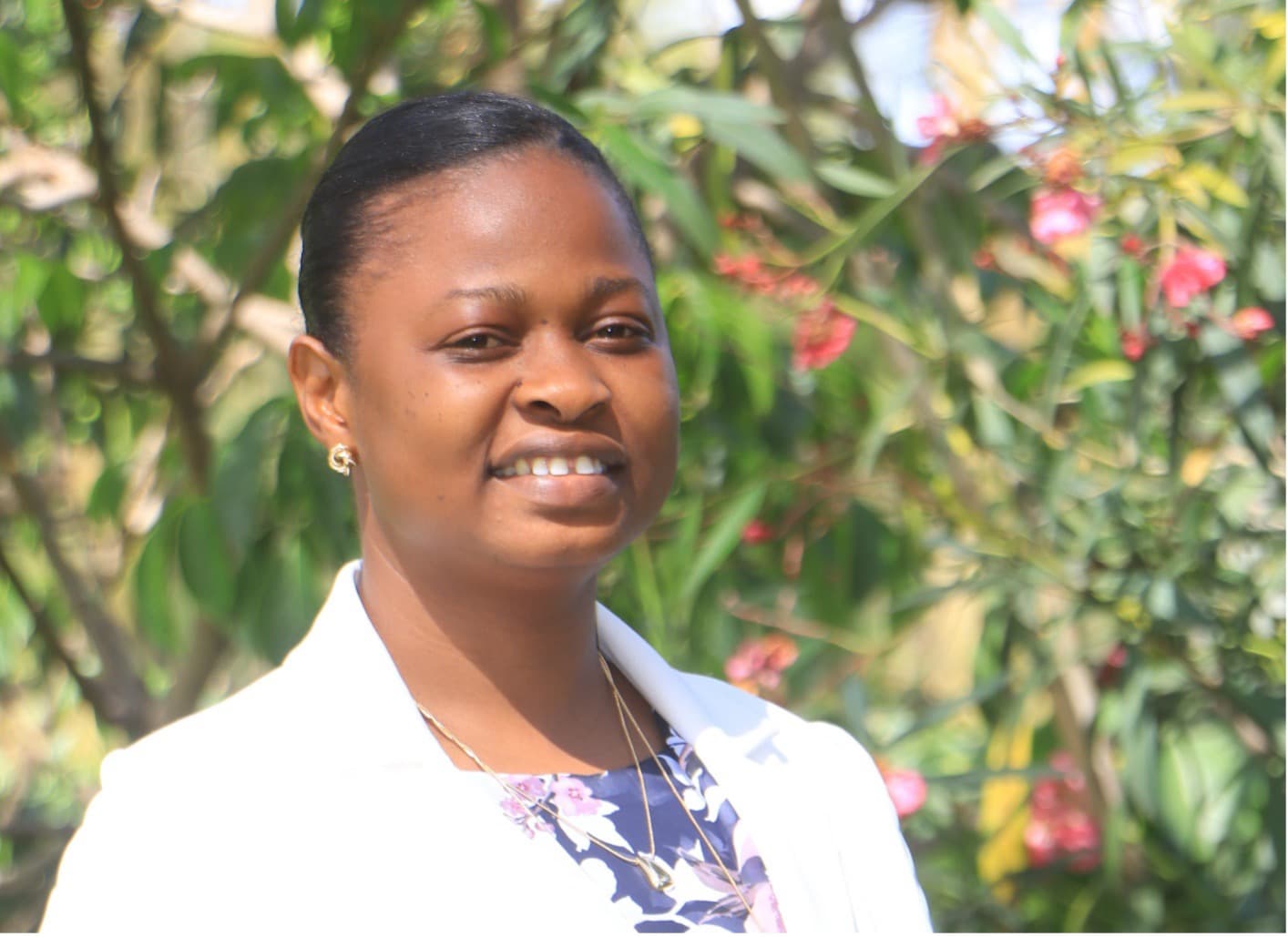
My name is Dr. Lobe Maloba, and I come from Cameroon, from the University of Buea, where I earned my PhD in Chemistry. I teach. I mentor. I learn. And I spend most of my days thinking about something that is both painfully simple and brutally complicated:
How do we design new medicines for malaria and other neglected tropical diseases especially now that resistance is catching up with what we have?
The problem that refuses to leave
Malaria is the kind of illness that can become background noise in places like mine so common you almost stop hearing it, until it enters your home again. It remains one of the world’s biggest public health challenges, with hundreds of thousands of deaths globally each year. And even though artemisinin combination therapies (ACTs) have been accepted as frontline treatment, drug resistance keeps showing up in reports and conversations among scientists.
Resistance changes everything.
Because it means the clock is always ticking. It means what saved lives yesterday might not save lives tomorrow. And it means our work cannot be “business as usual.” It has to be faster, smarter, and more imaginative.
So, I decided to commit my career to medicinal chemistry the space where chemistry meets medicine, where we design and build new small molecules with the hope that one day, after long testing and refinement, they become treatments that can hold the line when the old ones start to fail.
“In my head, I could already see the lab back home.”
When I was selected as an APTI Fellow, it felt like someone had opened a door and said, Come see what is possible.
People sometimes ask: What does malaria have to do with an institute focused on alcohol abuse? And I understand the question. But science is often like that, the most important thing isn’t the label on the building. It’s what is inside the expertise, the tools, the standards, the discipline.
At the NIH environment, I encountered a level of instrumentation and research workflow that changed the way I think. It’s not just about having “better machines.” It’s about how those machines shape your questions. How they widen your imagination. How they allow you to test ideas with a precision that makes your work more confident—and more credible.
And all the while, in the back of my mind, I was carrying a picture of Cameroon and our beloved African continent. Not as an abstract “home country” people mention in speeches. I mean a real, specific image: the students. The lab benches. The hunger to learn. The limitations we have learned to work around. The brilliant young scientists who need exposure and mentorship to become the next generation of leaders. I kept thinking, If I can learn this, I can teach it. If I can build this skill, I can build a team.
Drug discovery is not a single moment, it’s a long road
Drug discovery is sometimes described like a dramatic breakthrough, a single eureka moment.
But most days it feels more like walking. You design a molecule. You synthesize it. You test it. You learn it doesn’t do what you hoped or it does something else entirely. You adjust. You refine. You try again. And you keep walking.
My focus is on designing new small molecules to combat malaria and other neglected tropical diseases, particularly in the context of drug resistance. The aim is not just to create “new” molecules but to develop candidates with novel modes of action, so we are not constantly chasing the parasite’s next trick with the same old tools.
One approach I’m enthusiastic about is building libraries of compounds collections of molecules that we can systematically screen against pathogens. It sounds simple when you say it quickly, but it represents something powerful:
The part no one posts on social media
When people talk about training, they usually talk about the science. The techniques. The papers.
But for me, one of the most valuable parts of my NIH experience was what happened around the science.
I learned what it looks like to manage a research group not just the chemistry, but the human system which includes planning, safety, mentorship, documentation, supervision. I went through lab safety and management trainings, and I had the opportunity to mentor younger scientists in the lab. It gave me a different kind of confidence. Because when you return home, your impact is not measured only by what you know. It is measured by what you can build. And building means systems. Teams. Culture. Standards. Continuity.
“Cameroon needs medicinal chemists and Africa does too.”
There is something I need to say plainly, because it sits at the center of my motivation:
Capacity building in medicinal chemistry is still lacking in many parts of Africa.
And when capacity is lacking, we lean heavily on expertise from outside. Sometimes that is necessary. Collaboration is valuable. Global science is interconnected.
But dependence is dangerous.
Because dependence can become a habit. And habits can become policy. And policy can become the reason we are always waiting for someone else to solve what is killing us.
I don’t want Africa to be a place that only consumes scientific innovation. I want Africa to be a place that produces it responsibly, rigorously, and boldly.
That’s why, as I think about my long-term goals, I’m not only thinking about my next experiment. I’m thinking about what happens after I return to Cameroon.
At the University of Buea, we already have a mission that goes beyond the classroom: teaching, research, and outreach. That outreach matters to me. It’s where we can inspire young people. It’s where we can build a local culture that sees science not as something distant but as something we can do, here, with excellence.
The future I’m working toward
My long-term goal is to become a fully equipped medicinal chemist with the ability to advance a strong research niche in drug discovery. I want to build and expand a library of small molecules to be screened against malaria and other neglected tropical diseases. But if I’m honest, the future I’m working toward is even bigger than my own lab.
It’s a future where a young scientist in Cameroon does not feel they must leave Africa to do meaningful science. A future where our institutions are strengthened, upgraded, and respected. A future where mentorship is not rare, and high standards are not imported.
A future where we can say, with evidence:
We are solving our problems by building our own solutions. And if you ask me what I want people to remember from my story, it would be this. I am not chasing prestige; I am chasing possibility. For my students, For my institution, For my country, For Africa. Because malaria is not waiting. And neither are we.